Satellite & GIS
Sentinel-derived vegetation and stress signals zoned for operational fields.
Digital Africa · Nthaka IDSS
ProductsNthaka IDSSLive
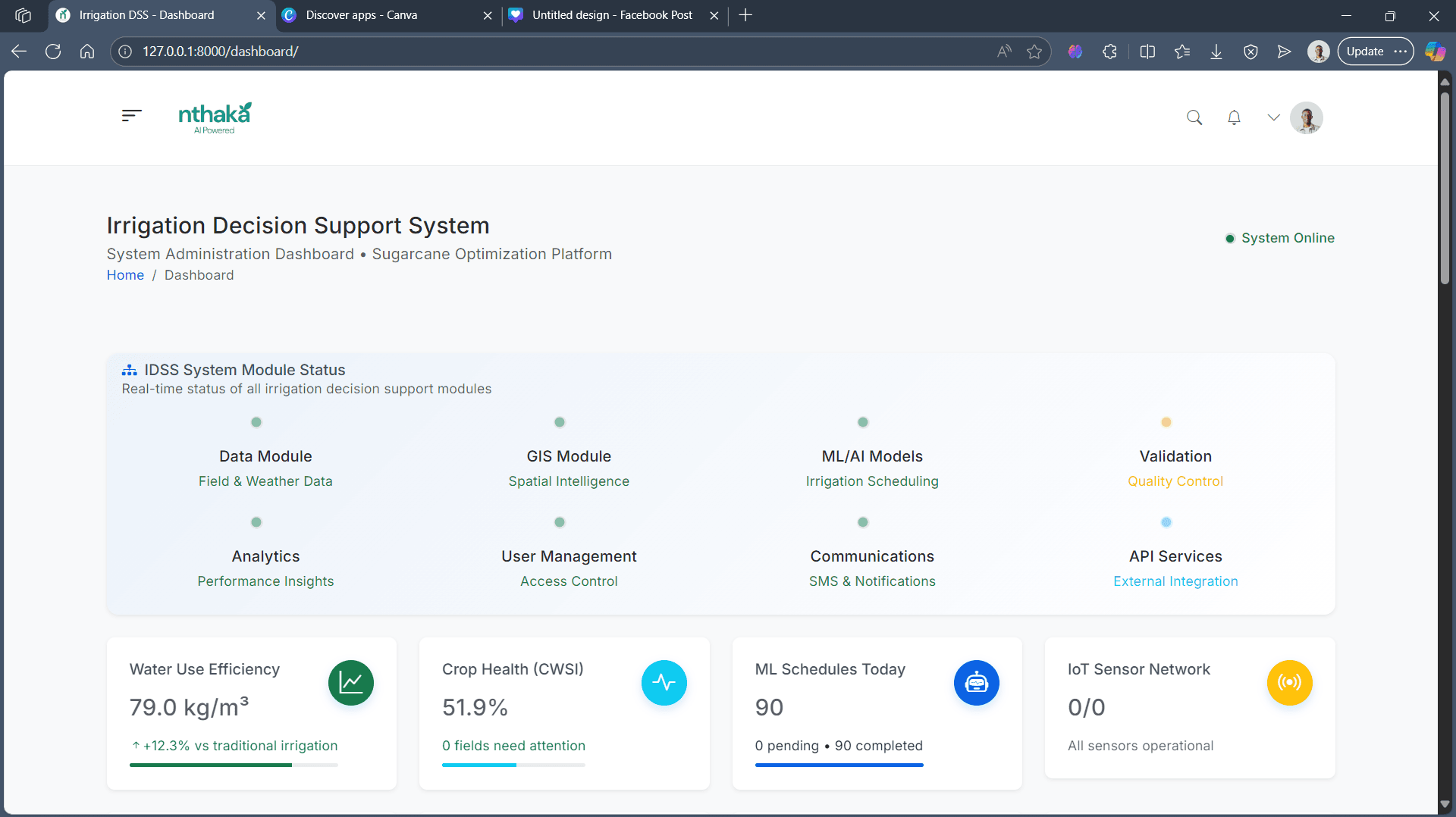
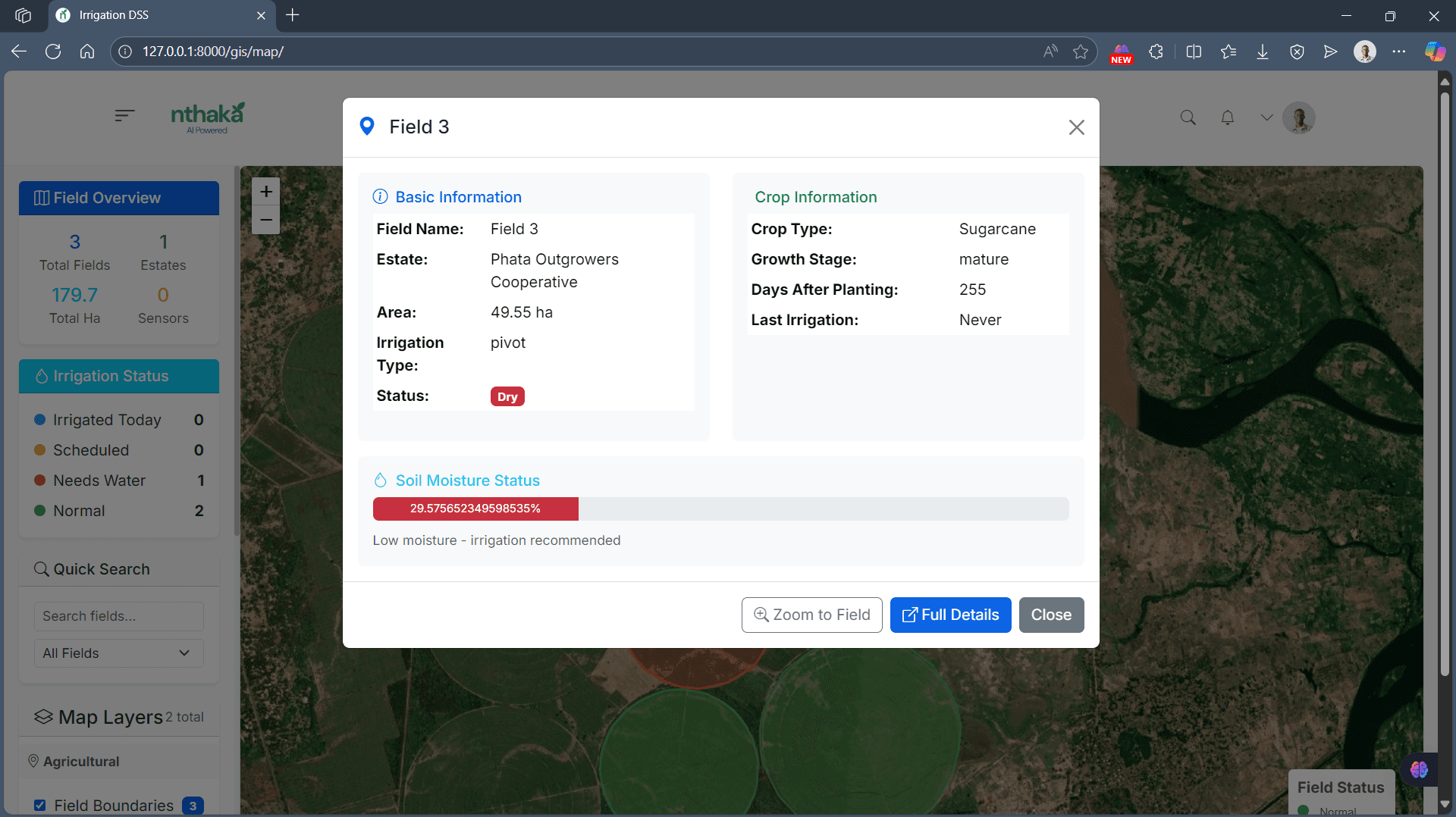
AI-powered irrigation decision support for cooperatives, estates, and programmes — combining satellite, weather, geospatial, and field data into actionable schedules.
For: irrigation schemes, outgrower cooperatives, commercial estates, and agriculture programmes.
Field-validated outcomes
24%
Less water used
Phata Cooperative, Chikwawa
95%
Faster irrigation decisions
Vs. manual scheduling
89%
Adoption after training
Farmer uptake post-onboarding
Outcomes cited from Phata Sugarcane Outgrowers Cooperative pilot materials. Model R² 0.9997 reported for irrigation prediction in deployment documentation.
The problem
When teams irrigate by habit rather than field signals, pumping costs rise and yields still suffer. Nthaka turns satellite, weather, and spatial data into schedules people can act on — especially where connectivity and agronomy capacity are constrained.
“I met a farmer who irrigated every day — because he believed it protected his crop. Instead he lost water, spent more on pumping, and still didn't get the yields he expected.”
Who it's for
Cooperatives & schemes
Shared guidance across members without needing a dedicated agronomy department.
Commercial estates
Role-based oversight, reporting, and scheduling suited to structured operations.
Programmes & institutions
Evidence-oriented views aligned with productivity and climate-resilience work.
How it works
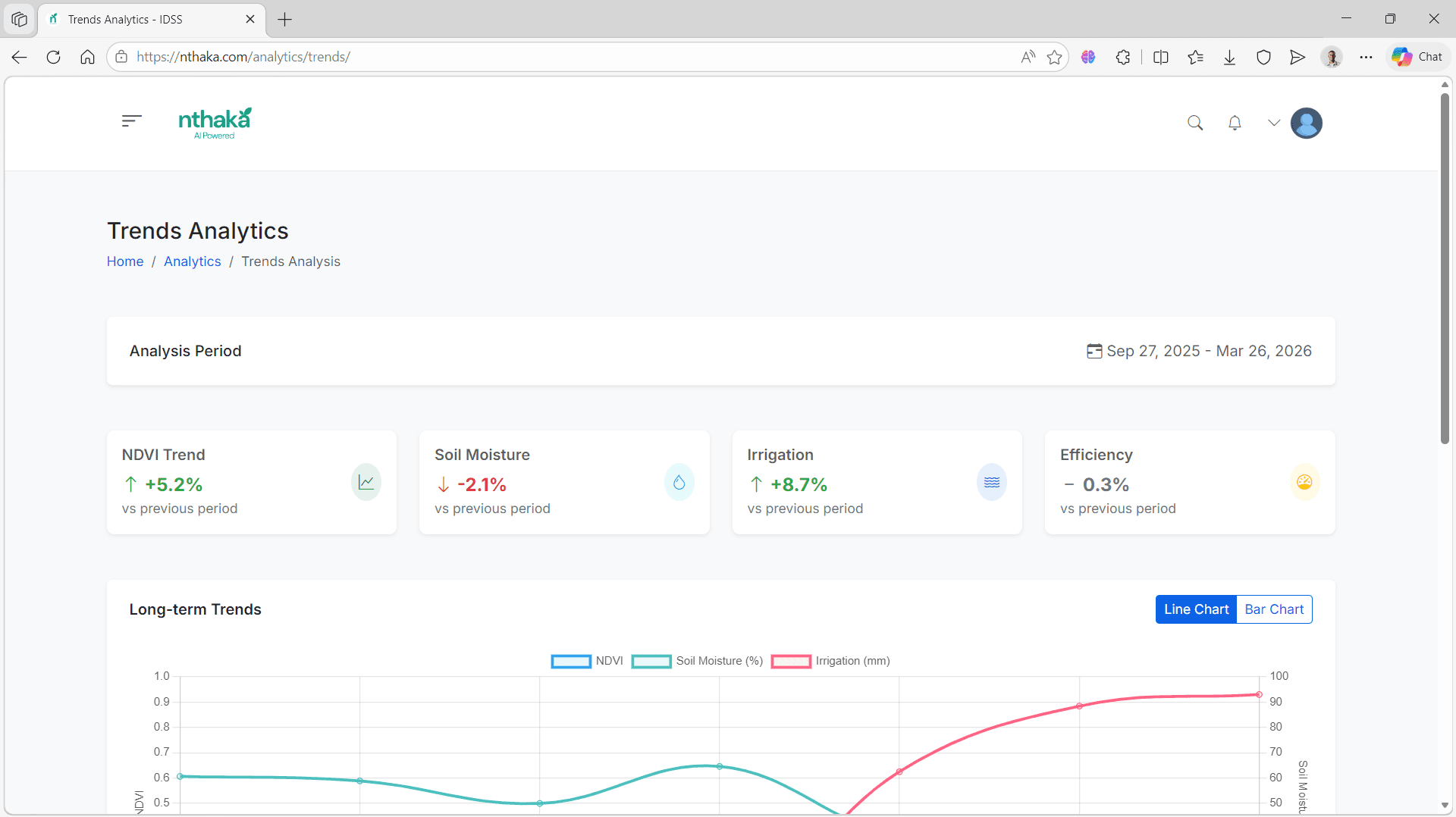
Signals in → quality and analytics → recommendations and alerts out. Built on Django, PostGIS, and open data sources suited to pilot and scale conversations.
Sentinel-derived vegetation and stress signals zoned for operational fields.
Live conditions and forecasts adjust recommendations as conditions change.
Predictive irrigation guidance grounded in multi-source field signals.
Browser-based workflows for field cadence — no forced app install.
Deployment context
Now
Phata Cooperative, Chikwawa — 1,000+ member farmers in pilot context.
Next
Broader Malawi rollout targeting additional districts and schemes.
Regional
SADC adaptation path (e.g. Zambia, Mozambique) with open-source foundations.
Recognition: AYuTe Africa Challenge Malawi 2025 Top 30 · MACRA ICT Innovation Awards 2026 Top 20.
Pilots, cooperative programmes, estate integrations — tell us your context and we'll route to the Nthaka team.